

Brown in Transition
From Earthy Foundations to a Study in Tone, Texture and Light
Fall brings an instinctive return to warmer tones, but brown is entering the season with a different attitude.
Brown has been fundamental for several seasons. What is changing now is not the importance of the colour itself, but the way we are beginning to construct with it.
The brown palette is becoming broader and more nuanced: tobacco, chestnut and mid-brown moving into coffee, chocolate and deep cacao. Rather than isolating these shades, this season invites them to exist together.
The sophistication comes through contrast.
A matte surface beside high-shine leather. Fine pleating against something structured. Softness interrupted by polish. Similar shades suddenly behave very differently when texture begins to catch or absorb the light.
This is where brown becomes particularly interesting to me as a trend forecaster. We are moving away from thinking about colour as a single flat proposition and towards experiencing colour through materiality.
The photographs here are an example from my own wardrobe. Pleated Issey Miyake trousers bring movement to a deep brown, while the polished leather of my JW Anderson bag creates almost an architectural quality through structure and shine. Marni shoes introduce another expression through their shape and finish.
The pieces don't need to share precisely the same brown. In fact, they shouldn't.
It is the tension between shades, surfaces and proportions that makes the palette feel current.
Brown Doesn't Replace Black
Black remains essential.
For many creatives in particular, black is almost a visual resting point; a constant within the wardrobe that creates calm while allowing ideas, silhouettes and colour to exist around it. Its relevance isn't disappearing.
Brown offers something else.
Where black can create definition, brown introduces warmth and depth. And because its spectrum is so broad, it allows us to build a look almost as we might build an interior: tone upon tone, material against material, with subtle differences becoming the detail.
That distinction becomes increasingly important as we move towards Fall/Winter 2026 and beyond.
And Then Comes Purple
Looking towards 2027, I see another shift emerging.
Introduce fresh purple into the brown spectrum.
Not necessarily as the dominant colour, but as an interruption.
Against cacao, espresso and chocolate, a clear purple feels unexpected. The earthiness of brown makes the purple appear fresher; the coolness of purple makes brown feel richer.
It might be a violet knit underneath deep chocolate tailoring. A purple sock appearing beneath a brown trouser. A single accessory. Or simply a small flash of colour within an otherwise tonal composition.
This is often where colour forecasting becomes most interesting. The question isn't always which colour comes next, but which existing colour suddenly changes when something new is placed beside it.
Brown isn't leaving.
It is becoming more complex.
At 1108B, I see the next evolution of brown through tone, texture and contrast; moving from matte to shine, soft to structured, mid-brown to cacao.
And as we move towards 2027, watch what happens when purple enters the conversation.
B’s Perspective
Don’t search for the perfect brown.
Build a spectrum of it.
Then interrupt it with purple.
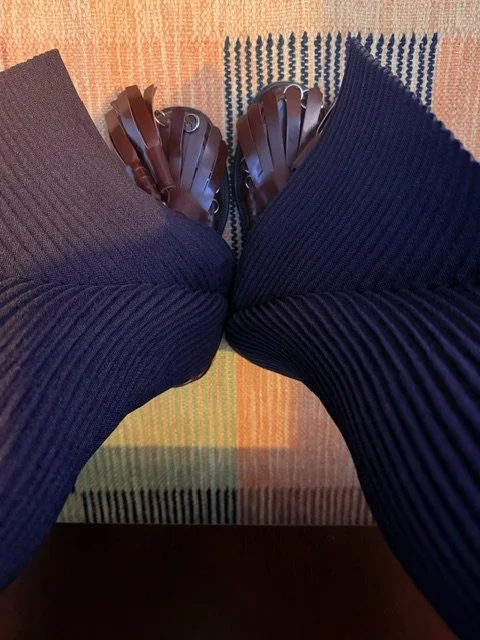
Pleated trousers: Issey Miyake · Tassel loafers: Marni
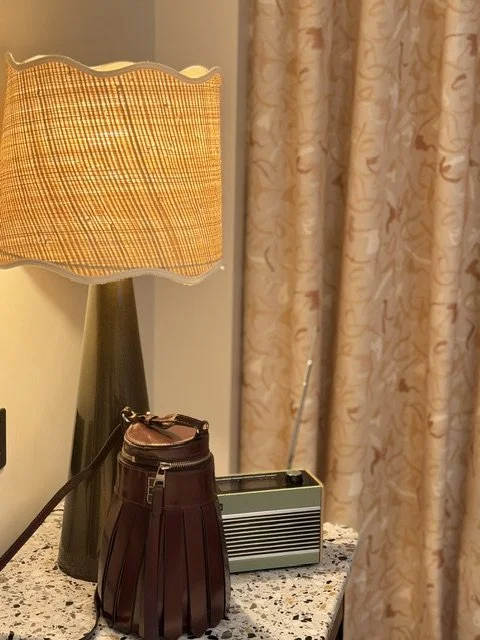
Bag: JW Anderson
